Certified by the following organisations




 19+ Years Industry Experience
 Dedicated customer & tech support
 Easy 3 step booking process
What is MEES? MEES (the Minimum Energy Efficiency Standards) is the law that sets the lowest EPC (Energy Performance Certificate) rating a landlord in England and Wales can let a property at. Today that minimum is EPC E for both rented homes and commercial buildings, so a property rated F or G can't be let unless it has a registered exemption.
Rented homes must reach EPC C by 1 October 2030 (confirmed policy). For larger commercial buildings, EPC B from 2031 has been proposed but isn't law. We provide MEES advice for both, showing which improvements get your property to the rating it needs.
 Over 19 years experience providing property surveys for all building
types.
Specialising in MEES Consultation, EPCs and other services for your
property.
Contact us for free quotes and impartial advice.
Over 19 years experience providing property surveys for all building
types.
Specialising in MEES Consultation, EPCs and other services for your
property.
Contact us for free quotes and impartial advice.
Which MEES guide do you need?
While the legislation currently applies to rentals, an increasing number of banks and financial institutions now insist that buildings for sale also meet the same standards before they will provide finance or carry out property transactions. Getting ahead of the requirements now makes financial sense.
MEES legislation is changing. Visit MEES Legislation current and proposed changes to get the latest updates, or see our EPC changes explained guide.

Simply request your quote using our contact form or by phone. Our customer care team will quickly get in touch during opening hours.

We will arrange an appointment with you, carry out the survey, and once completed send you an invoice.

As soon as we receive payment of the invoice, we will email your MEES Report. We also offer corporate accounts, with survey delivery on completion and monthly billing.
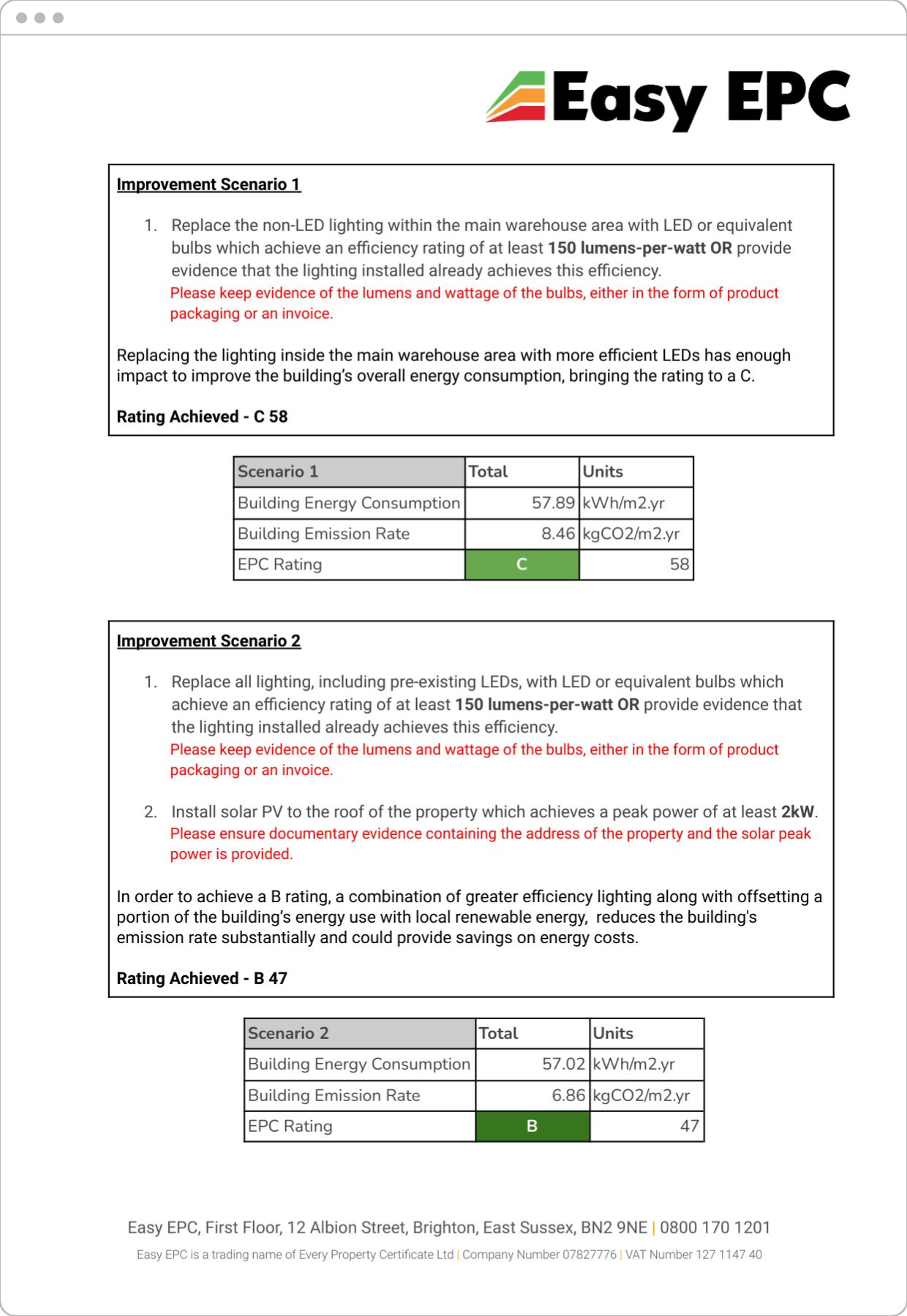
Once you have reviewed the report we are also happy to talk you through the different scenarios in detail, and to carry out further analysis to produce an additional scenario combining recommendations from the previously provided scenarios if this is what you require.


It is important to note that one of the key bits of information required to apply to be added to this register is a valid EPC. This means that if you are applying for an exemption for a property which would not normally require an EPC, such as listed building, then for the purposes of your MEES exemption application you will need to have a valid EPC in place.
All categories of exemption except the ‘New Landlord’ Exemption are valid for a period of 5 years. After this period the landlord again endeavour to improve the property’s EPC rating to meet the minimum standards. If this cannot be achieved then a further exemption may be able to be applied for.
Your building may be classified as exempt from MEES legislation for one of the following reasons:
For a full breakdown of each exemption and to find out if you can apply, check out our MEES Exemption Guide.


Before we can issue a MEES report for your property we must first have carried out the appropriate type of EPC survey on your property, and this must have been within the last 6 months. Unfortunately we cannot base our MEES report on an EPC survey carried out by another person or company, as we have no way of verifying the accuracy of their work, and would not have access to the full set of data required to produce our report. Get in touch if you need to book a new EPC survey
To produce the MEES report, one of our team of energy efficiency experts will first look through the data that was collected when we carried out your EPC survey. They will then consult with you to establish what type of energy saving measures are practical in your situation.
Once we have carried out this consultation process we will calculate what the EPC rating for your building would be if you carried out a variety of different sets of measures, focusing on establishing the most cost effective and least disruptive ways to get your building to at least an E rating.

Key confirmed details for the domestic private rented sector (PRS) from 2030:
New powers will require an Act of Parliament and a statutory instrument (SI) amending the Energy Efficiency (Private Rented Property)(England and Wales) Regulations 2015. The legislation is expected to come into force in 2027, giving landlords time to plan. The direction is confirmed, so acting early is the lower-risk approach.
For commercial (non-domestic) properties the regime is different. In an interim response on 18 June 2026 the government proposed that privately rented buildings over 1,000 square metres should reach EPC B from 2031, where cost-effective, with smaller buildings staying at the current EPC E minimum. That's a proposal, not law yet. See our commercial MEES regulations page for detail, or read our landlord MEES guide for the domestic position.
Last reviewed: September 2026


The basic information we need to be able to provide you with a price for the survey is:
It is useful and may enable us to offer a cheaper quote if you are also able to provide the following information:
Once we have provided you with a quote, if you wish to go ahead and book we will also need invoicing details and contact details for whoever will be meeting us on site. We don't charge up-front, but will invoice you for the work on completion, and release the MEES Report to you upon receipt of payment.
After you have booked with us we will contact you to discuss which measures are suitable for your property. Once we have consulted with you it takes us about 3 working days to produce the report, at which point we will contact you to let you know it's ready and provide you with an invoice. On payment of the invoice we will email your MEES Report to you.
Use our online booking tool to quickly get a quote for your MEES Report.
Our prices start from £49.95 + VAT, depending on size and location of the property.


MEES (the Minimum Energy Efficiency Standards) is the law that sets the lowest EPC rating a landlord in England and Wales can let a property at. Today that minimum is EPC E for both rented homes and commercial buildings, so a property rated F or G can't be let unless it has a registered exemption.
Minimum Energy Efficiency Standards (MEES) regulations initially came into force in April 2018 and, after being updated several times over the years, now require that all domestic and non-domestic rental properties in England and Wales achieve at least an EPC E rating unless an approved MEES exemption is in place.
For the domestic private rented sector (PRS), the confirmed next step is EPC C by 1 October 2030, as announced on 21 January 2026 under the government’s Warm Homes Plan. This is confirmed policy, not a proposal. Landlords should plan now to avoid rushed works and higher costs later.
MEES Consultancy is our service that uses real data from your property and specialist software to calculate multiple scenarios to improve the energy efficiency of the property to the desired rating, taking into account any limitations there may be due to building use, construction, and budget. We cover both the current EPC E standard and planning ahead for the confirmed EPC C requirement by 2030.
MEES Consultancy is a desk-based exercise completed using data collected during the original EPC site visit, and as such no additional on-site survey is required provided an Easy EPC survey has already been carried out.
Domestic (current regime, EPC E minimum)
A fine of up to £5,000 per property.
Domestic (confirmed 2030 regime, EPC C minimum)
The penalty is confirmed to rise to up to £30,000 per property once the new rules come into force.
Commercial
A fine of up to £150,000.
MEES regulations are enforced by local authorities.
The government confirmed on 21 January 2026 that domestic rental properties in England and Wales must achieve EPC C by 1 October 2030. This applies to the private rented sector (PRS). The spending cap will rise from the current £3,500 to £10,000 per property. Landlords who achieve EPC C before 1 October 2029 will be grandfathered as compliant until that EPC expires. See our landlord MEES guide for further detail.
Our prices start from £49.95 + VAT, depending on size and location of the property.
19+ Years Industry Experience
Dedicated customer & tech support
Easy 3 step booking process
Every property certificate, swiftly delivered